Global Etiquette for Travelers: Quick Rules That Work
Why global etiquette matters on real trips
Global etiquette isn’t about memorizing rigid rules—it’s about reducing friction so everyday moments go smoothly. The way you greet a front-desk agent, stand in line, speak on public transit, or accept a business card can shape how welcoming (or uncomfortable) an interaction becomes.
- Respect builds better interactions: smoother hotel check-ins, friendlier service, and warmer conversations with locals.
- Small norms carry big meaning: punctuality, queueing, volume, and personal space differ widely by country and context.
- Some “harmless” habits can be offensive: certain gestures, photos in sensitive places, or casual jokes about religion and politics.
- Etiquette supports safety: blending in reduces unwanted attention and helps avoid escalating misunderstandings.
For destination planning and safety basics, it also helps to review official travel guidance before departure, such as the U.S. Department of State – International Travel, the UK Foreign travel advice, and the CDC – Travelers’ Health.
What’s inside the digital download eBook
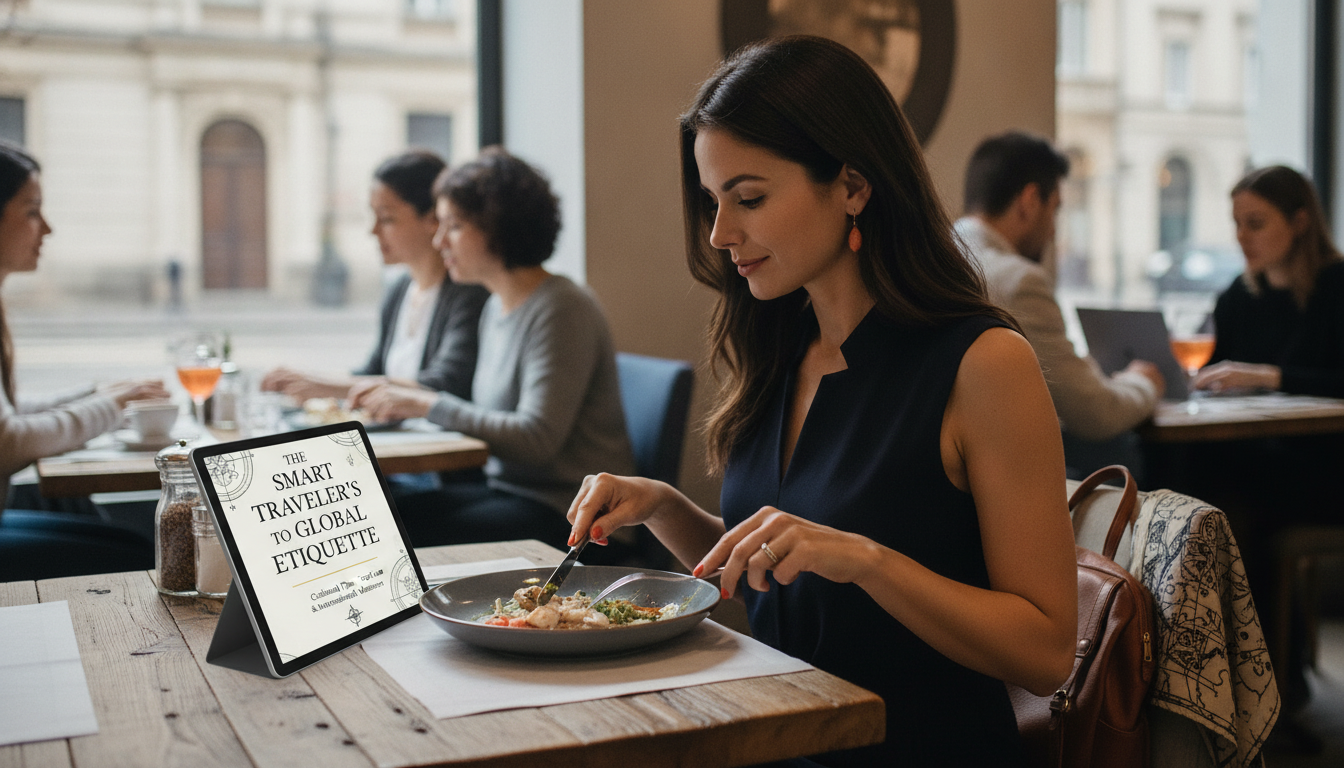
The Smart Traveler’s Guide to Global Etiquette digital download is built for quick decisions: what to do when you’re stepping into a restaurant, meeting a host, or entering a sacred site and don’t want to guess wrong.
- Quick cultural framework: how to read the room (formal vs. casual settings, age hierarchy, and saving face).
- Greetings and introductions: handshakes, bows, cheek kisses, name order, and titles.
- Dining etiquette: seating, chopstick and utensil rules, shared plates, alcohol toasts, and finishing the meal.
- Public manners: queues, transit etiquette, noise levels, and appropriate phone use.
- Tipping and payment customs: when tipping is expected, discouraged, or replaced by service charges.
- Dress codes: temples and religious sites, business attire norms, beachwear boundaries, and modesty expectations.
- Business and professional etiquette: meeting protocol, gift-giving, and negotiation tone across cultures.
- Practical checklists: pre-departure reminders and “before you go inside” prompts for restaurants, homes, and sacred sites.
Common etiquette pitfalls—and what to do instead
When etiquette goes wrong, it’s rarely about intention. It’s usually about speed: you act before you notice the local rhythm. A few habits prevent most missteps.
- Use context cues: follow local pacing in lines, elevators, and customer-service interactions.
- When uncertain, choose the more formal option: polite greetings, modest dress, and restrained body language.
- Ask permission before photos: especially in markets, religious areas, and when children are involved.
- Learn a few courtesy phrases: hello, please, thank you, excuse me, and “Do you speak…?”
- Handle mistakes gracefully: a brief apology and a calm correction is better than overexplaining.
Quick fixes for high-impact situations
| Situation | Common mistake | Better approach |
|---|---|---|
| Greeting someone new | Using an overly casual first-name approach everywhere | Start formal (titles/surnames) and let locals invite informality |
| Entering homes or certain venues | Keeping shoes on by default | Look for shoe racks/signs; ask or follow the host’s lead |
| Dining with shared dishes | Serving yourself first or taking the last piece | Wait for cues; offer others first; ask before taking the last portion |
| Tipping after a meal | Assuming a U.S.-style percentage everywhere | Check local norms; note service charges; tip only when culturally appropriate |
| Gestures and pointing | Pointing with one finger or using an “OK” sign | Use an open hand; keep gestures minimal when unsure |
| Religious sites | Wearing revealing clothes or speaking loudly | Dress modestly; lower voice; follow posted rules about photos and behavior |
Region-by-region manners travelers notice first
Even within the same region, etiquette can shift dramatically across borders and settings (business vs. beach town, big city vs. rural area). These are the differences travelers tend to feel right away.
- East Asia: emphasis on harmony and respect—mind volume, avoid confrontational phrasing, and observe etiquette around giving/receiving items.
- Southeast Asia: modesty and respect for religion are central—be attentive to temple rules, footwear customs, and appropriate touch.
- Middle East: hospitality is significant—be mindful of dress, greetings, and context-specific norms around public affection and alcohol.
- Europe: social rules vary by country—punctuality, dining tempo, and personal space expectations can change across borders.
- Latin America: warmth and relationship-building matter—greetings may be more personal, and schedules can be more flexible depending on the setting.
- Africa: customs differ widely by region—observe local guidance on greetings, photography, and public interactions.
Dining, drinking, and hosting: the moments that shape impressions
Meals are where etiquette becomes most visible—especially when you’re sharing dishes, navigating toasts, or visiting someone’s home. A few “soft skills” keep things comfortable for everyone at the table.
How to use the eBook on the go
Digital travel add-ons that help trips run smoother
- Keep essentials easy to track: losing keys or a bag tag can derail a tight schedule, particularly during connections.
- Consider a simple tracker accessory: a Silicone AirTag Holder makes it easier to attach a tracker to luggage, backpacks, or a keyring.
- Stay powered for maps and translation: long transit days go better when your phone stays charged; a dedicated desk or hotel-nightstand setup can make charging more reliable, like the Cute Bear Stand for MagSafe Charger.
FAQ
Is the eBook useful for both first-time and experienced travelers?
Yes. It works as a foundation for first-time travelers with core rules and checklists, and it’s also a fast refresher for frequent travelers who want quick regional reminders for high-risk moments like dining, business meetings, and religious sites.
Does it cover tipping, dining, and gestures?
Yes. It includes practical guidance on tipping and payment customs, dining etiquette, and common gesture pitfalls, with an emphasis on do/don’t patterns and context cues since customs can vary by country and situation.
How do you handle a cultural mistake while traveling?
Offer a brief apology, correct course calmly, and move on without debating or overexplaining. Observe and mirror local behavior, and when needed, ask a hotel staff member or local guide for a quick clarification.












Leave a comment